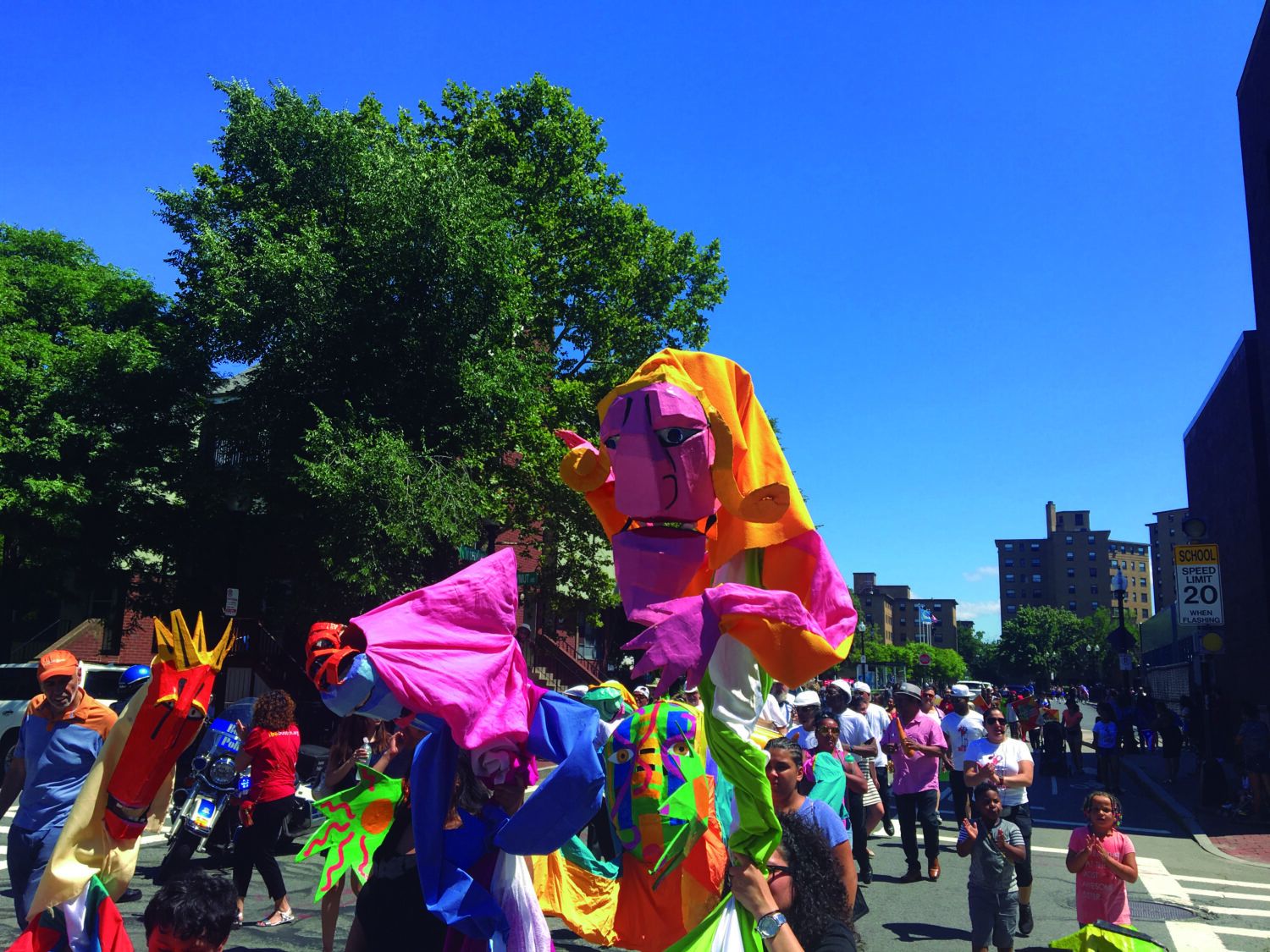
Good public art involves the public. When created with collaboration and care at the center, it has the power to reflect a community’s shared values and aspirations.
The story behind the new mural in Meier Hall at Salem State University shows the power of public art for the public, by the public.
Planting seeds of possibility
Salem State University sits within the city of Salem, a gateway city in Massachusetts that is home to people from diverse cultural and ethnic backgrounds. Recently, Salem State University became Massachusetts’ first formally designated Hispanic Serving Institution, recognizing how the University contributes to improved economic and social outcomes for Hispanic students.
Keeping pace with the student body, the University made changes to its curriculum and services to support their diversity by adding culturally relevant classes and support services. Under the leadership of Dr. Elisa Castillo, an Assistant Vice President focused on improving experiences and outcomes for students of color, the campus community began to express a desire to see themselves celebrated in Salem State’s public spaces, too.
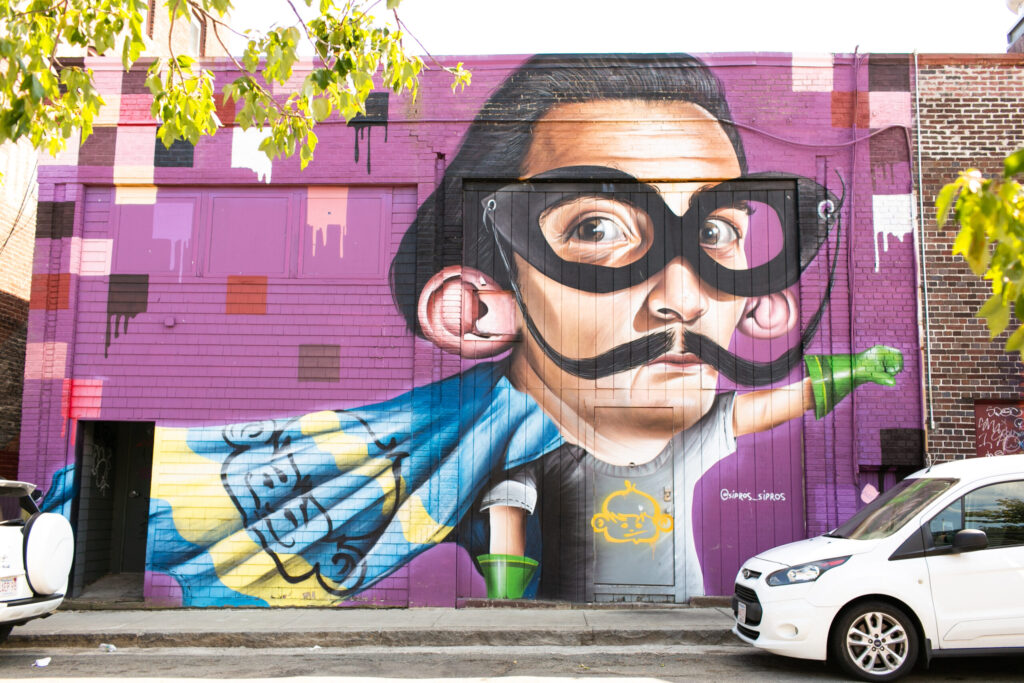
Public art was already a growing topic of conversation in Salem thanks to Punto Urban Art Museum, a project of North Shore Community Development Coalition. Through projects across the city, they were modeling what it looks like to engage the community in the artistic process, creating strong relationships with artists, and showing that it’s possible for locals to influence the art popping up in their neighborhoods.
Dr. Castillo brought a group of students and faculty to Casa de Abuela, one of Punto’s activations that turned a parking lot into a space of activation and connection. They left with the sense that they could make Meier Hall feel the same way.
“When students enter Meier Hall,” Dr. Castillo said of the project, “we want them to feel like they belong. We want them to connect with our community. We want them to be curious and excited about their opportunities here.”


Holding up a mirror
With encouragement and guidance from Punto, a group of students, faculty, and community advocates met with a shared vision and purpose: design a mural that honored Salem’s multicultural histories while also reflecting the spirit and aspirations of today’s student body.
Directed by the work within the committee, professors led talks with students about the original mural, who painted it, and how it came to be. The committee created a survey to help understand the community’s perspectives on the mural. Responses poured in about the colors, how it felt to look at the artwork, and what messages it sent to viewers.
Using Punto’s experience in both working with artists and activating the community, Project Manager Yinette Guzman led the committee through the process of translating those observations into a request for proposals, reviewing artists’ submissions, and vetting potential designs. “We ended up with over 150 applicants from all over the world, and the committee narrowed it down to 10. Then we had a second vote to take it down to four artists who would be paid to produce sketches with more specific information,” said Guzman.
Those four proposals were presented to the community. Over 300 people voted to select the final artists.
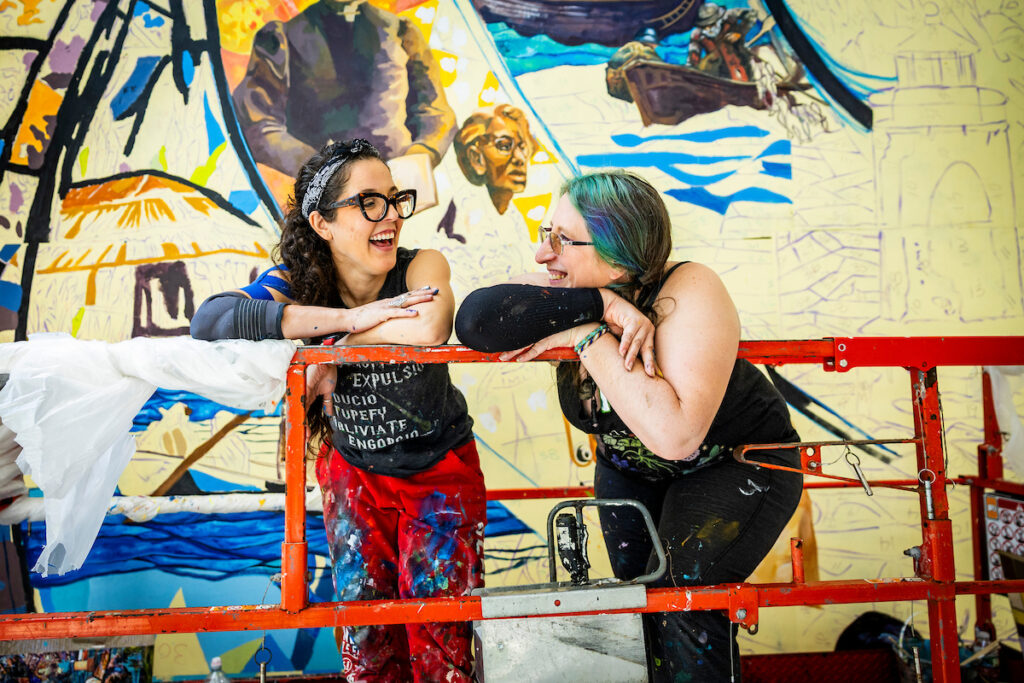
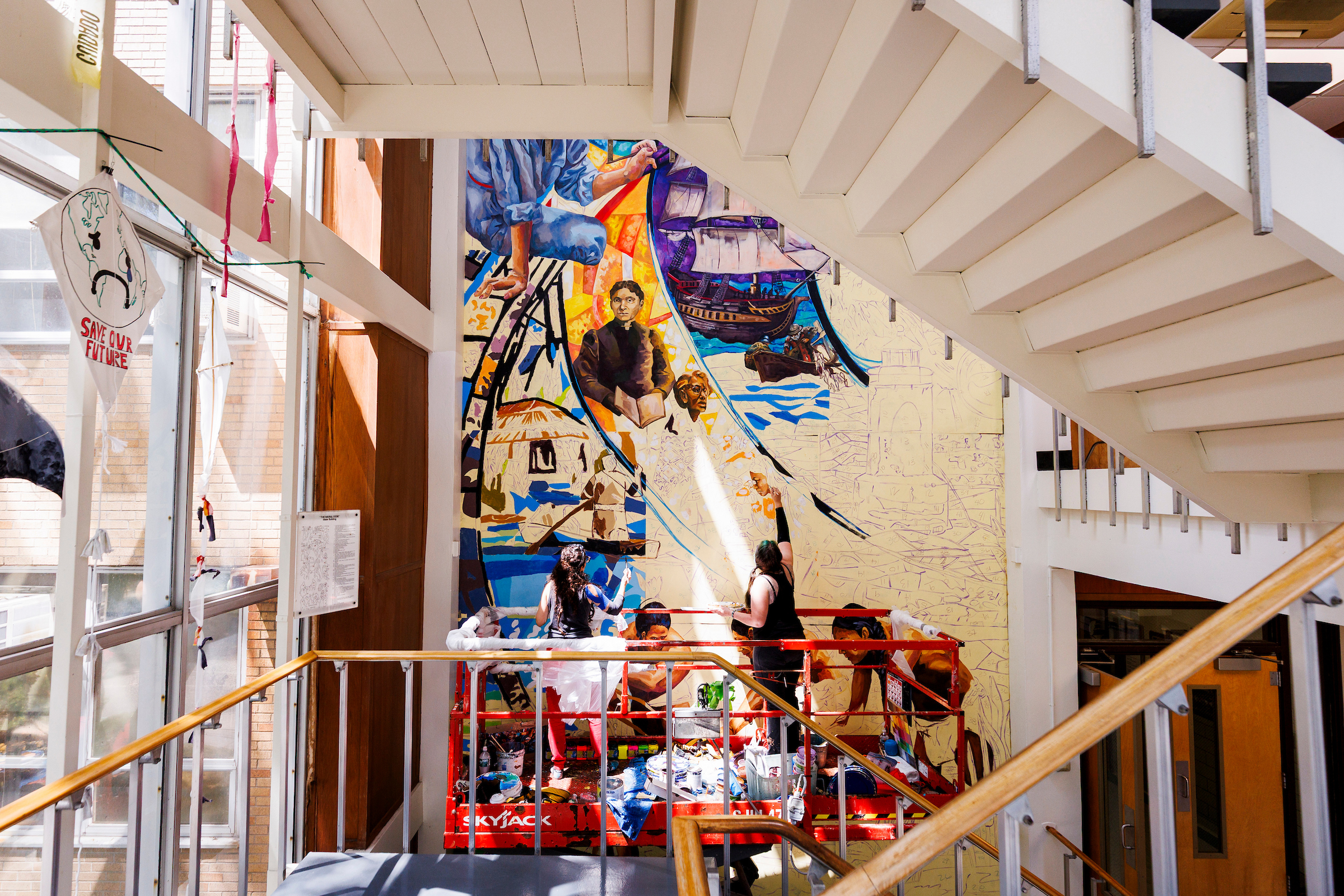
The community ultimately chose Gabriela Sepulveda Ortiz and Melissa Stratton Padina of Hare & Howl Studios. Their proposal followed the same format of the original mural, making use of the soaring height of the stairwell space to tell a story that unfolds as you climb up.
“We decided to focus on people who changed Salem for the better, who fought for improvement,” said Sepulveda Ortiz. In the mural, you can see central historical figures like Nathaniel Hawthorne and Charlotte Forten, Puerto Rican immigrants who came to Salem during Operation Bootstrap. “All of these origin stories get to be told.”
Making it real
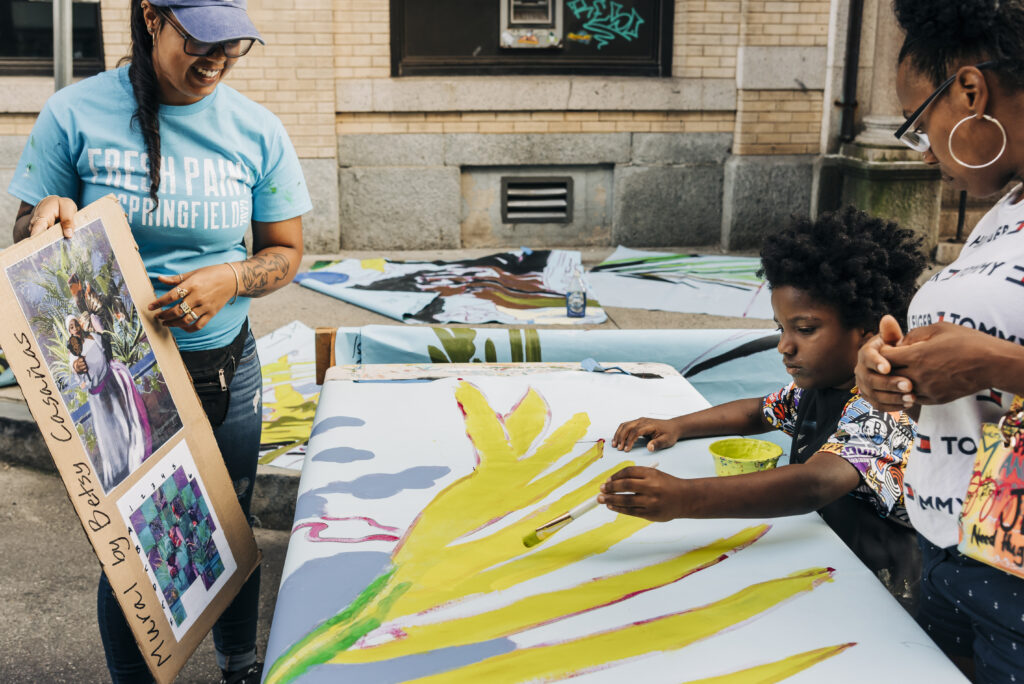
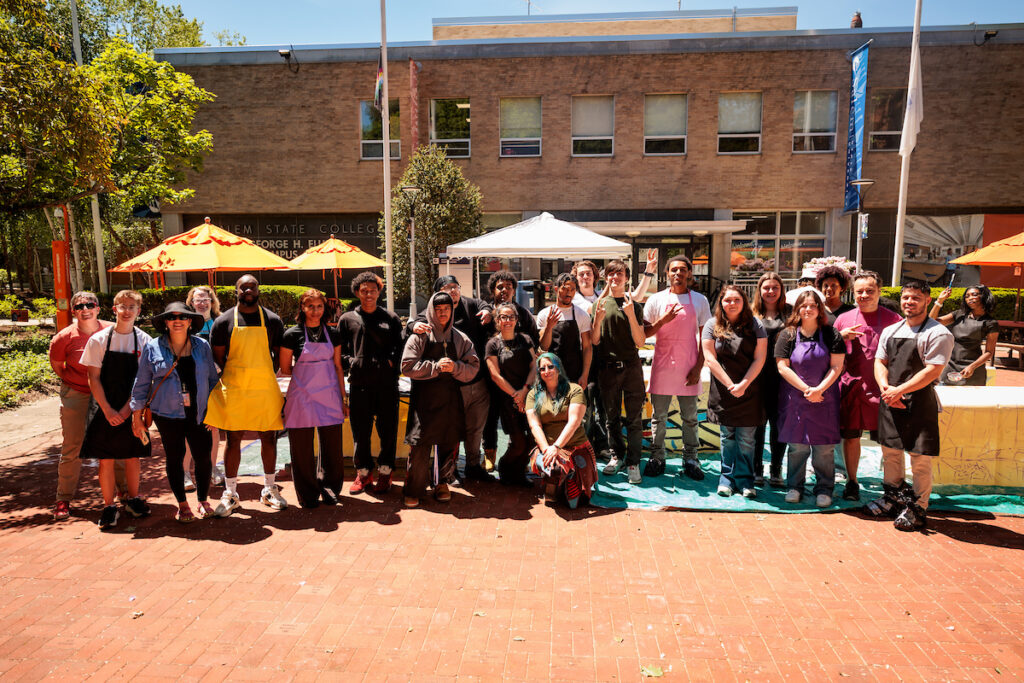
Once the design was finalized, the artists rendered the entire 60-foot mural as a giant, to-scale paint-by-numbers and laid it out in Alumni Plaza for a public painting party. Anyone who showed up was given a smock, a small tub of paint, and a paint brush. Within a few hours, the panels were full of color, people bumping elbows in search of their number.

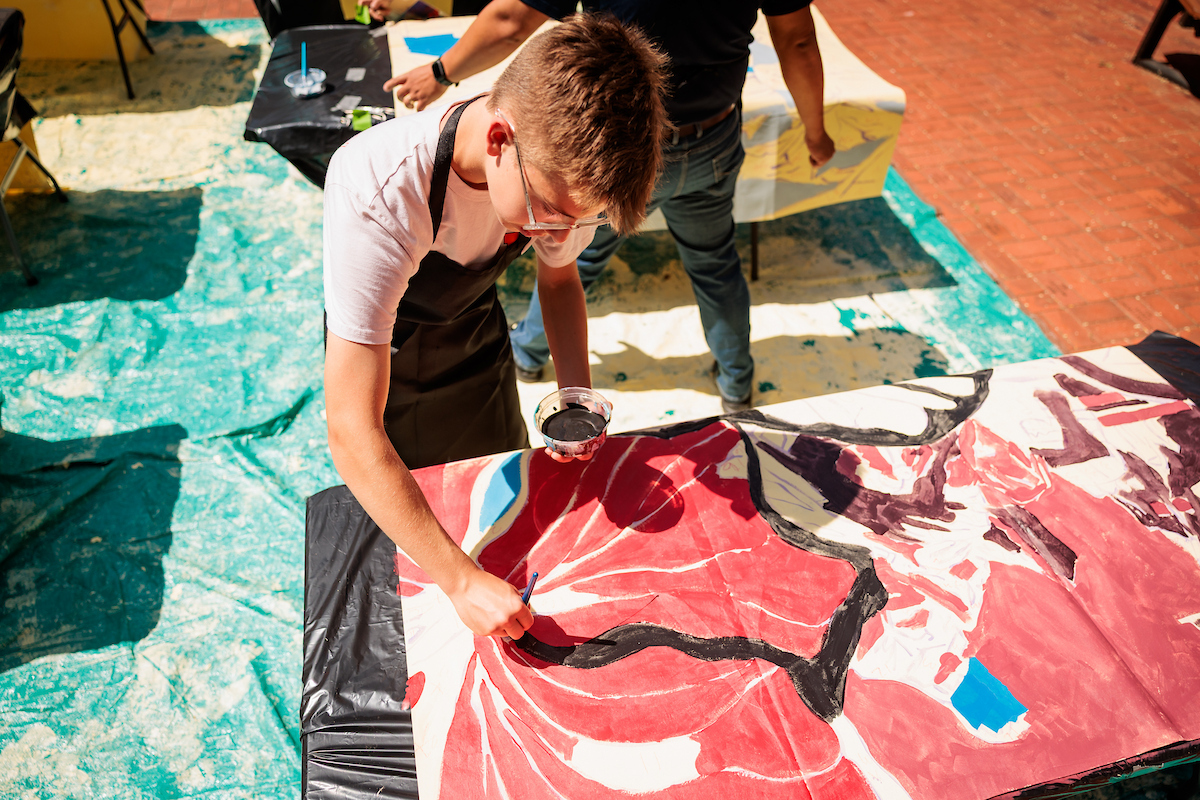
In between handing out paint refills, Melissa spoke about the importance of collaboration in projects like this. “Community engaged mural making is so special because the brushstrokes laid in by locals actually go up on the wall. Their hands are involved in the mural as much as ours.”
After everything dried, the artists glued the canvas panels on top of the original mural and began filling in the details.
As the mural opens, there is a sense of unlocked potential. “A misconception that a lot of people out in the world fall victim to, is this idea that you have to be a certain kind of person or have a certain kind of power to create the change that you want to see,” said Liv Duarte, one of the students on the mural committee.
“Public art emphasizes the idea of collective power and collective voice. We are the ones responsible for holding each other accountable, uplifting each other, and supporting each other.”