When Budah started high school, he aspired to learn a trade that interested him and would build long-term financial stability. He was determined to “go big” in whatever he tried, and envisioned one day buying his dream home. But a few years in, Budah’s school was not working for him. Classes did not feel relevant or interesting, systems of support were lacking, and the structure of school was allowing him to go through the motions of getting a diploma – without really meeting his needs or helping him achieve his goals for the future. Feeling disconnected and unmotivated, Budah began skipping class and eventually dropped out.
Budah’s story is far from unusual. Prior to the pandemic, about 16% of students in the U.S. were chronically absent – meaning that they missed roughly one day out of every two weeks of school. Following COVID-19, however, that number rose to nearly 30% of students. Since then, districts have been trying – and struggling – to get kids back into school. Chronic absenteeism has been further complicated by the impacts of immigration enforcement efforts on school attendance. Many school systems have implemented closer data monitoring, calls and texts home, and home visits. Others have focused on increasing access to mental health supports. These are all good things – and there is evidence that they are working.
But these kinds of interventions – which focus primarily on getting kids back into school buildings, rather than changing what they experience once they are there – also have their limitations. Consider: In 2023, the Barr Foundation’s Education Program partnered with Beacon Research to survey both students and parents/caregivers in New England about their experiences with their local high schools. One of the questions we asked was:
“Which is closer to your view of school attendance?
- Daily attendance is worthy of my/my child’s time and important for their future; OR
- The daily school experience is lacking and missing some days won’t impact my/their future”
In response, a whopping 41% of students, and 20% of parents, selected the second option. Perhaps most telling, students who felt like their voice didn’t matter at school or that their school didn’t meet their needs were twice as likely to say that missing some school days would not affect their future.
A recent report from Transcend Education affirms these findings. Transcend found that students who reported higher quality learning experiences had a 33% lower rate of chronic absenteeism as compared to students who reported lower quality experiences. This finding holds true across race, ethnicity, grade, gender, and disability status.
The study also found that “the majority [of students] say that school feels irrelevant, is boring, and offers them few opportunities to take charge of their learning.” The percentage of students who report loving school plummets from 73% in grade 3 to 29% in grade 11, and similarly, the percentage of students who report learning a lot in school drops from 86% in grade 3 to just over half by high school. Our data from visiting dozens of high schools each year also corroborate this student feedback: student learning experiences often lack challenging and meaningful content.
This is one of the many reasons why Barr has invested heavily over the years in improving instructional quality in high schools across New England. We believe the high school years are a critical stage that can alter the trajectory of a young person’s life. All students deserve access to high-quality learning experiences that are rigorous, relevant, and prepare them for a life of choice. It takes a whole community of students, teachers, coaches, administrators, counselors, and more all working together to do the complex and important work of school change.
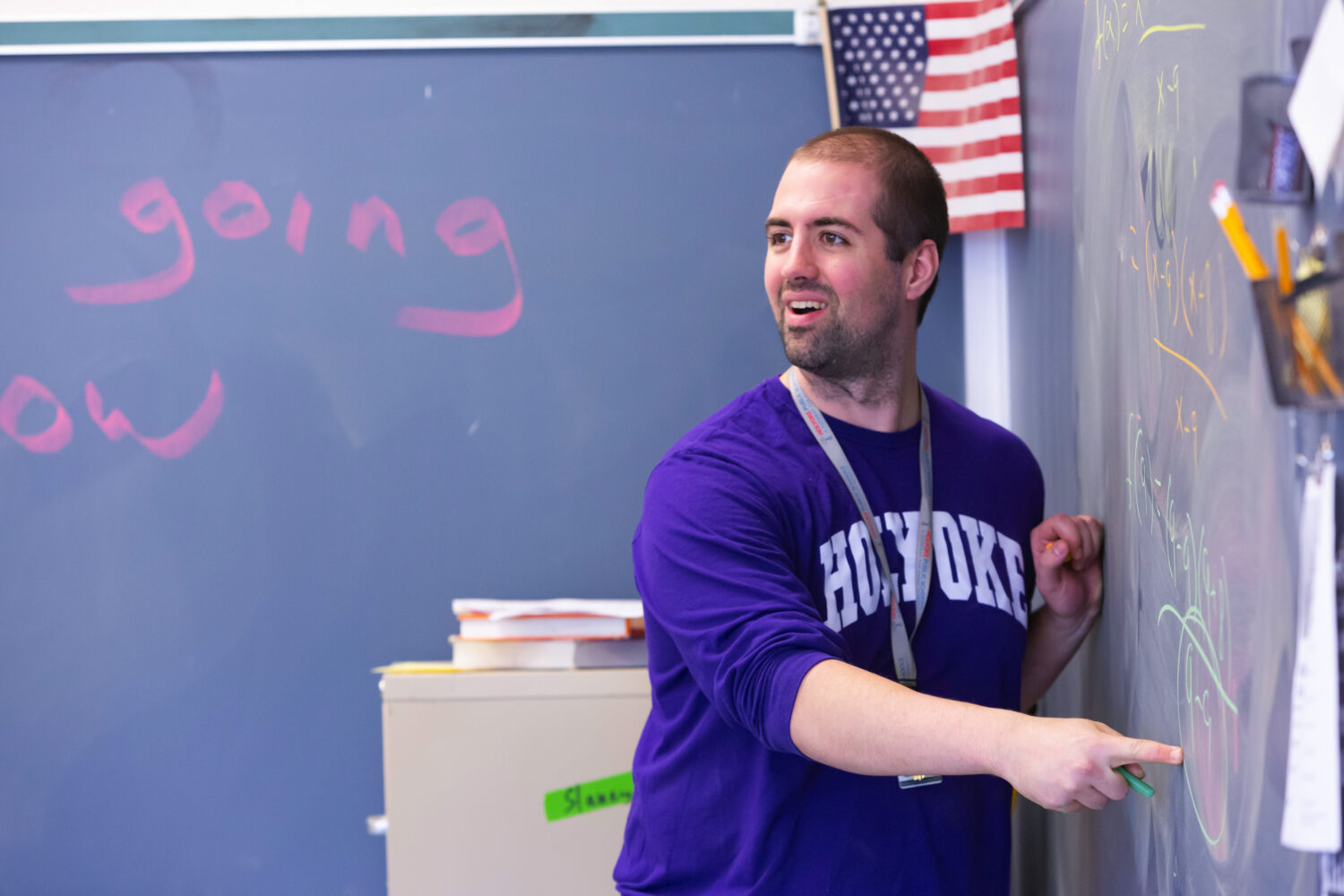
One of the ways the Barr Foundation’s Education Program supports improvement in what and how students learn is by investing in Transformative Learning Experiences, or TLEs. Created by Springpoint, a nonprofit focused on transforming high school education, TLEs are hands-on projects that ask students to think deeply about real-world issues. For example, in the Communities and Opportunities project, students learn how data can be used to support and improve their local communities. In the Fake News project, students explore how media influences what we believe. These projects challenge students to think critically, build important skills, and are designed so that every student can participate and succeed.
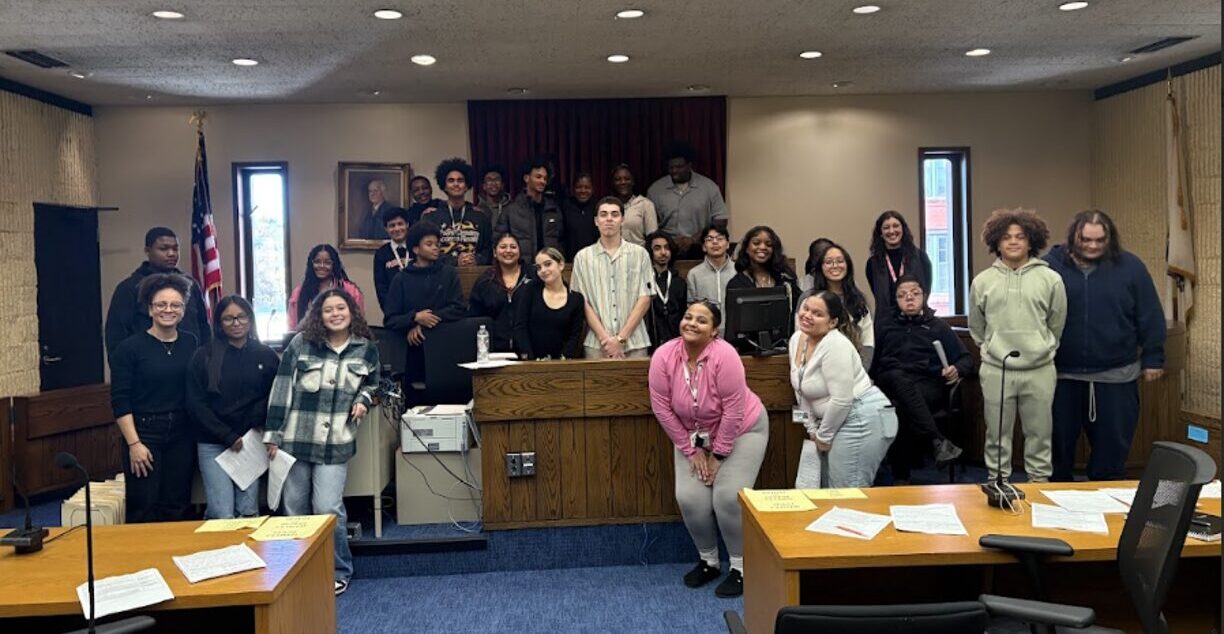
When Budah re-enrolled in a different high school, everything changed. In his history class, Budah had the opportunity to participate in a TLE called “Students and the Law,” which explored how the U.S. Supreme Court currently defines – and how it should define — students’ constitutional rights. It was an experience unlike any that Budah had before. “In this class, everyone had a role,” he says. “It wasn’t just the ‘smart’ kids answering questions. Everyone had to participate… And the more you voiced your opinion, the stronger you got. It was building an argument over time, not turning something in to get points or a grade. It wasn’t writing something sloppy just to turn it in and being done with it… it was actually getting it back with valid feedback, feeling the need to change what’s wrong, until it resembled an official judicial opinion.”
The impact of a meaningful and rigorous learning experience and excellent teaching practices was profound. On the content side, Budah learned about his constitutional and civil rights through immersing in a real court scenario. On the personal side, he “found a voice that wasn’t talking yet. I was way more interested, serious. People said, ‘you have good ideas.’ They allowed me to be myself. I didn’t have to change who I am to be seen as smart. It brought back the light to learning and made me want to demonstrate my knowledge.” Budah graduated as his high school’s graduation speaker and is now exploring postsecondary education, an option he had not considered for himself before.
Transformative Learning Experiences and other instructional changes are not a silver bullet. Even the best teaching and learning, for example, will not allay fears brought on by increased immigration enforcement. But if we want students to attend school consistently and enthusiastically, we’ll need to address what they experience when they are there. Our young people deserve a school experience that is worthy of their time and that supports to them to thrive in and after high school.
Want to learn more about how to make students feel heard? Read this article for practical tips on organizing a Student Summit.