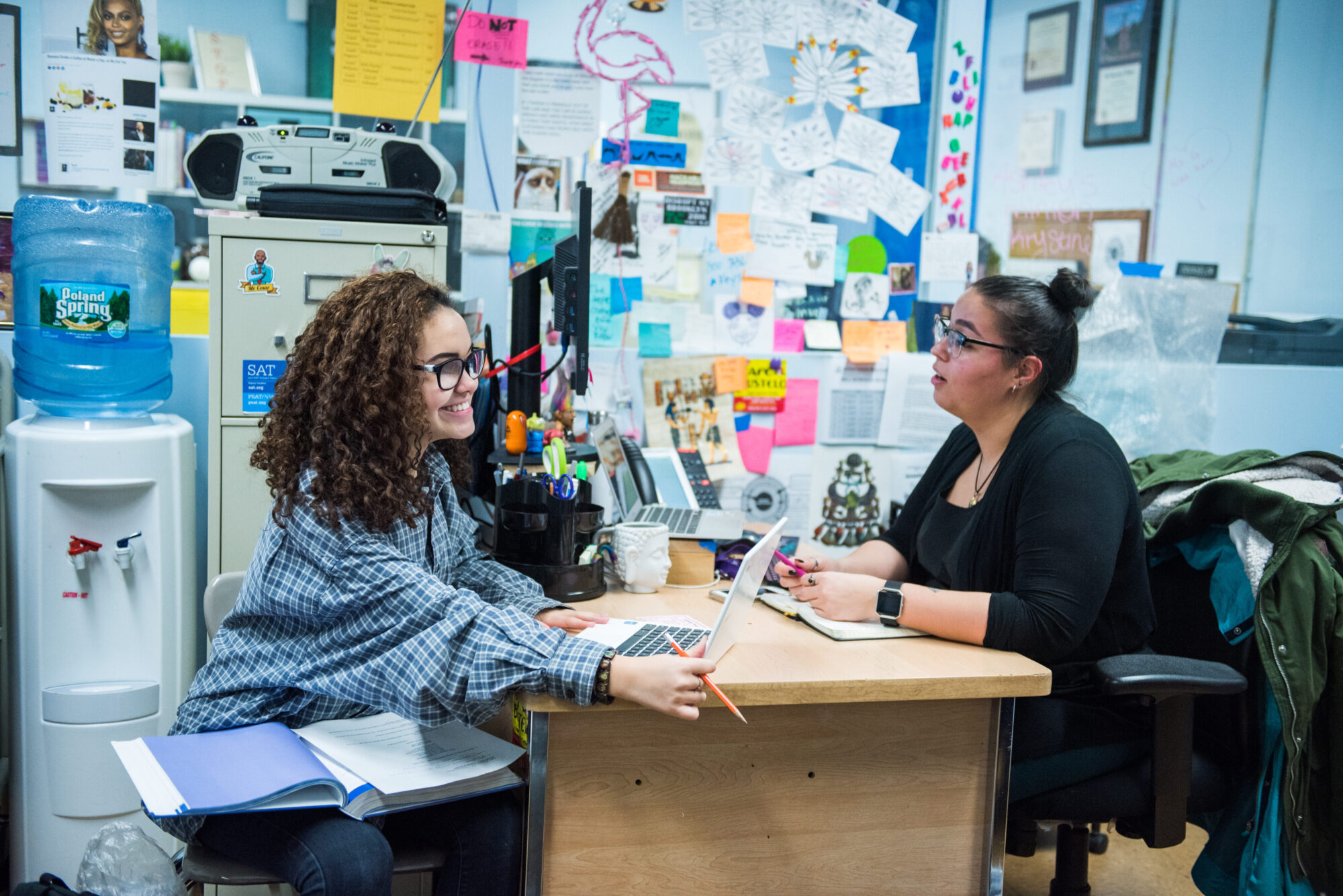
School transformation is possible

A note from Jenny Curtin, Barr’s Director of Education

A key finding of the Massachusetts Economic Conditions and Household Opportunity Survey highlighted the stark difference in wealth between those who pursued higher education and those who hadn’t finished high school. Massachusetts families with an adult member who completed a bachelor’s degree reported a median net wealth of well over 400 thousand. For those who had not completed high school that number fell to just over $1,000.

Today, just as in 2016 when the Engage New England (ENE) initiative launched, the data remains clear and consistent: high schools matter; a lot.

A meaningful high school experience and diploma are gateways to opportunities that drive economic mobility and the ability to live choice-filled lives, and to contribute to the workforce, community life, and our democracy. Despite this, high school improvement efforts from philanthropy, nonprofits, and education leaders are rare, and where they do exist, such efforts are often too narrow and too short-term.

It’s not because it’s not needed. The US education system was never designed to educate all students, and it was certainly not designed to prepare students to meet the evolving demands of today.

Through Engage New England, we set out to address this reality. We could not be more excited about the progress that has been made thus far and we recognize there is still a ways to go. We encourage any district leaders who are exploring high school transformation to make good use of our decade of lessons-learned and the resulting tools to transform public schools to meet the needs of students today.

About the Initiative

In 2016, Barr launched Engage New England to “do high school differently.” Barr invested over $30 million in this new approach because of a gap in the field: too many students, including those who were most marginalized and least well-served by traditional systems, were not being adequately supported.

Barr partnered with Springpoint and SRI to venture into a new area that other funders were not yet investing in and that districts were not yet designed to address. This was a deliberate and values-driven decision to embrace risk, take a long-term view, and invest in reimagining high school through a lens of equity, grounded in research, practitioner experience, and state-level priorities.

At its core, this work is rooted in the belief that students are and have always been capable. Unfortunately, most high schools were not designed to provide meaningful relationships with educators and rigorous, relevant learning that students need to thrive. As a result, young people can experience isolation and disengagement that narrows their sense of what’s possible in school and, beyond school, in life.

Every young person deserves a school that recognizes their strengths, cultivates their potential, and prepares them for what comes next.
When schools are built with young people and around their strengths and needs, students are more engaged, challenged, and prepared for their future. Creating those experiences requires a long-term commitment, continuous learning, and a willingness to adapt to intentionally create schools where every student can succeed.

For a decade, our partner schools committed to reimagining the high school experience and testing the possibilities. Together, we have learned there is not a one-size-fits all model, but rather whole high school transformation is possible by adopting four fully adaptable key pillars.

The Engage New England initiative enabled eighteen districts to reimagine high school. Five were able to go deeper to embed four pillars into their models. Ultimately, these schools in partnership with a technical assistant partner refined a student-centered approach to the high school experience that leads, not only to graduation, but to a clear vision of success for life beyond graduation.

The Four Pillars for School Transformation

Primary Person Model

"Most of the time, the advisor [at previous school] just sat there, and we would just do nothing. In [ENE school], it’s different because we go over things, we write down how our week was, our goals, some action steps. It’s much more different, and I like it because I can talk to my teacher about my goals and they can help me with that." — Johan

Leadership Coaching

"This is about showing us what is possible for kids. And it's also believing in schools and believing in leaders that have been really passionate about doing this type of work but really didn’t have the guidance, direction, or backing to really make it happen." – Jeff

Transformative Learning Experiences (TLEs)

“One thing you always hear students say in [a traditional high school]…when am I ever going to need this? You don’t hear that here. We’re learning stuff that you need if you want to make it in this world, and I think that’s a privilege that a lot of other students don’t get to see.” — Stefanie

Postsecondary Planning

"I actually took this course [where] we explore ourselves. We figure out what was our past, and we try to connect [to the present], and then at the end…we have an idea of what we want in the future.” — Fatimah

Trends We're Excited About

  • 80 %

    Reported more confidence to learn, face challenges, and effectively perform tasks.

    “I feel confident that I can find a new way to learn something when it is challenging for me.”

  • 92 %

    See connections between what they learn in TLEs and their life.

    “I can see how what I learned in this TLE connects to issues in my own life, local community, and world outside of school.”

  • 92 %

    Feel the work was appropriately challenging.

    “This TLE challenged me to do difficult work.”

2025 Student Survey Technical Report

This 2025 study examined the planning, implementation, and sustainability of these model high schools, provides formative feedback to the foundation, the technical assistance provider, and the schools to support continuous improvement.

HIGHLIGHTS
  • Students at ENE schools were more likely than students at traditional schools to report that their advisor (assigned adult) knew them well and believed they could succeed (Exhibit 4). 
  • On average, students at ENE schools reported that a higher proportion of their classes were rigorous and were purposeful compared with students at comparison schools (Exhibit 6). They also reported a supportive classroom environment in a higher proportion of their courses than did comparison students at traditional high schools.
  • Students at ENE schools were more likely than students at traditional and alternative schools to report that they had created a postsecondary plan and that someone at their school had helped them develop this plan (Exhibit 8).
  • Students at ENE schools more strongly agreed that their school had provided them with postsecondary guidance than students at traditional and alternative schools, but their higher sense of efficacy related to these plans was not statistically significant (Exhibit 9).

Student Experiences and Outcomes

Kevin at Chelsea Opportunity Academy

Earlier in high school, Kevin struggled academically and personally, navigating family challenges, working night shifts, and dealing with the impact of the Covid-19 pandemic. He said his confidence and motivation declined, he saw school as less relevant, and he disenrolled from the local comprehensive high school during 11th grade.

At Chelsea Opportunity Academy, Kevin went from keeping to himself to becoming a leader.

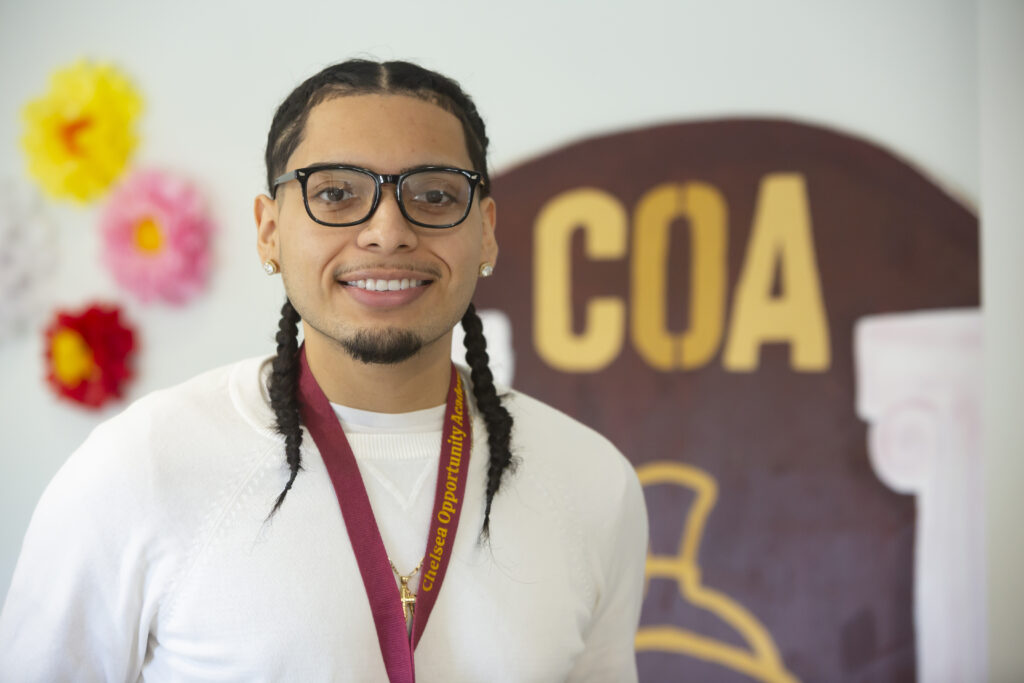
Kevin a high school student stands in a high school classroom, wearing glasses and a white shirt
“I thought it was just a regular high school. But then when I saw later on, day-by-day, it’s a different thing.”

Kevin, High School Graduate

Student Experiences and Outcomes

Dominic at Evolve Academy

Dominic shared that graduating high school was not always a given. During elementary and middle school, he experienced a period of four to five years when he did not attend school. A new living situation provided stability and accountability, and he began attending a local high school in ninth grade. Dominic’s attendance improved, but he struggled academically and soon fell behind in credits.

Due to his experience at Evolve Academy, Dominic graduated on time, finishing most of his required credits halfway through his senior year.

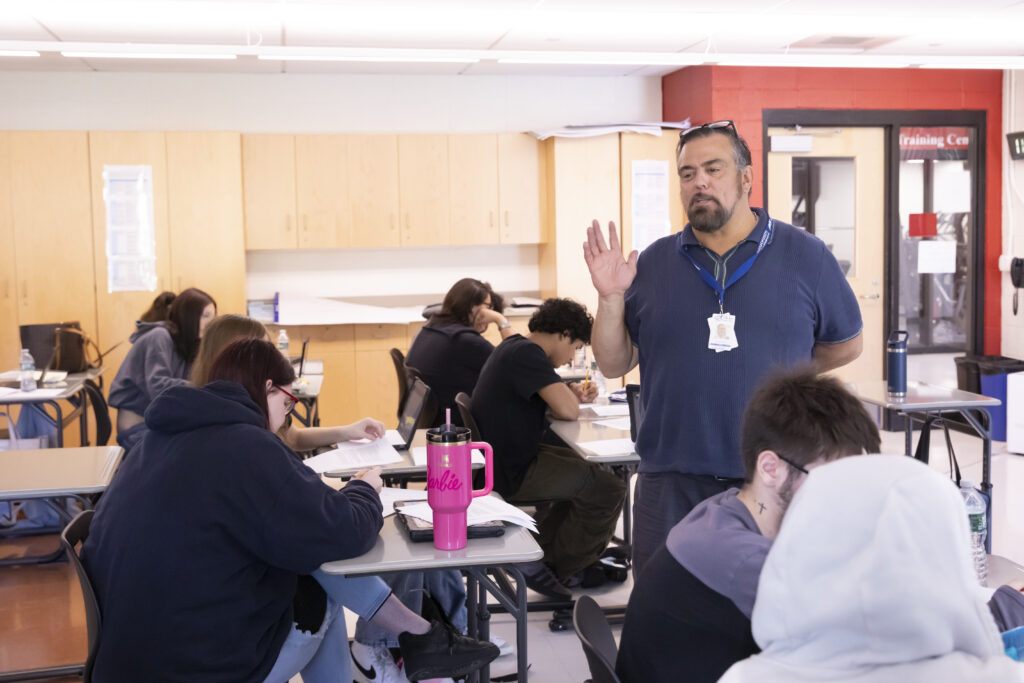
A teacher stands in the middle of a high school classroom
“I think what kept me interested is the fact that [the classes at my high school are] real-world classes and stuff that I could use.”

Dominic, High School Graduate

Student Experience and Outcomes

Elijah at Holyoke Opportunity Academy
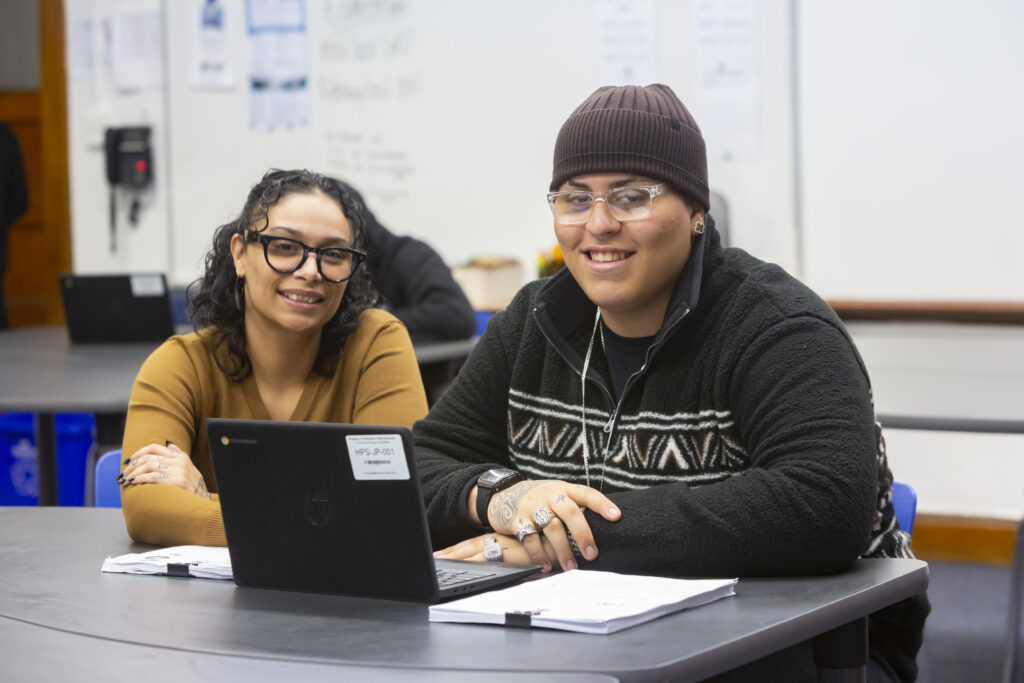
Before enrolling at Holyoke Opportunity Academy as a junior, Elijah’s future was less certain. He did not feel like he had adults at his previous school to turn to for help, and he struggled to engage. He described himself as lacking motivation and associating with peers who did not prioritize his success. Without support in his classes, Elijah said it was easy to give up, and he did not know if he would graduate.

During his time at HOA, Elijah’s true potential was tapped and he was able graduate a couple months early.


“I feel confident about reaching my goals now.”

Elijah, High School Graduate

Looking Back and Looking Ahead

This initiative was Barr’s first comprehensive investment to put into practice the vision of the Catalyze New Models portfolio, which is to provide the space and resources to support school to fundamentally rethink the purpose and design of school to deliver the experiences every young person deserves. 

Over the decade, we worked collaboratively with cohorts of schools as they designed and launched new high school models. New school models in communities like Chelsea, Holyoke, and Providence have shown what’s possible when schools are intentionally designed to have more equitable and excellent outcomes for students. 

Ultimately, ENE is a story of learning and iteration. There were tough choices to make across the 10-year arc of the initiative and significant progress was made. And still today, in 2026, we recognize there is more work to be done. We believe this work can be carried forward by any school, in any state.

Across all three Education portfolios our common north star was to affect change so that students can thrive in high school and beyond graduation. Students deserve to graduate with options — including the ability to be successful in college — and be on a path for economic mobility that supports the life they wish to live. As we look ahead, we continue to believe efforts must be centered on students and grounded in the student experience in schools.

Insights from Engage New England

View all View all blog posts