Today, the Federal Reserve Bank of Boston released an important new report, “Family Wealth in Massachusetts: Findings from the 2025 Massachusetts Economic Conditions and Household Opportunity Survey” (Mass ECHOS). The findings are a clear indication of the work still to be done to reduce the wealth gap in Massachusetts.
Wealth can mean different things to different people. In the report, wealth refers to one’s assets such as property, businesses, savings, investments, and cash. Which is an important technical approach. At Barr, keeping in mind the lived experience of Massachusetts residents, we believe ‘having wealth’ is the ability to financially navigate an unexpected job loss, a serious illness, or buy and/or maintain a home. It is the difference between one’s ability to live to their fullest potential and a trajectory that mires them in debt.
The data paints a picture of how close so many residents are to that downward trajectory. The report found that:
- While half of MA families have $374K or more in assets—one-in-six families report having nothing. Nearly one-in-four young families report having zero or negative net wealth. And when accounting for race, 31% of Black families and 40% of Hispanic families report having zero or negative net wealth.
- Urban families have one-quarter the wealth of rural and suburban families. Graduate degree holders have over 860× more wealth than those without high school diplomas. Homeowners have about 500× more wealth than renters.
- And most striking, half of the respondents from our state’s 29 Gateway Cities and one-third of households statewide said they cannot access $400 in cash or the equivalent to cover the cost of an unexpected expense such as a car repair, illness, or household emergency.
While this report applied different methodologies and focused on broader geographies than the well-known 2015 Federal Reserve Bank of Boston study “The Color of Wealth in Boston,” the findings show that broad wealth gaps remain starkly evident today. It is exceedingly clear that existing barriers within our nation’s systems make it challenging for people to change their financial circumstances.
We believe that all people should have opportunities to live in to their aspirations. These findings highlight the persistence of wealth gaps that have developed over centuries of systemic inequity. At the same time, the findings provide an updated baseline for exploring options to reduce economic vulnerabilities and strengthen local communities. To that end, we believe the clearest path forward is by working together — across sectors and ideologies to remove preexisting barriers and improve access to capital.
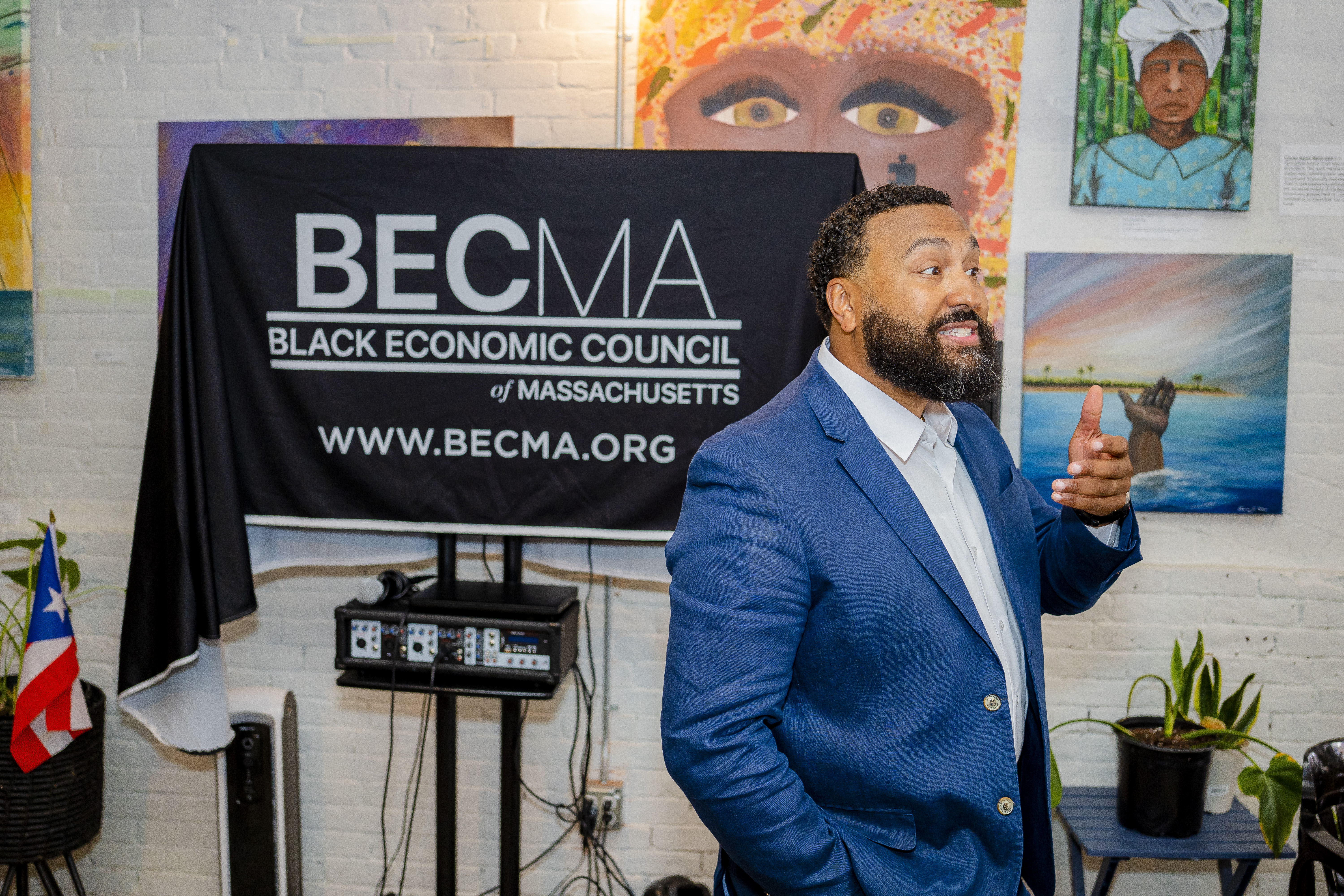
In 2022, Barr began partnering with a number of organizations who are working to remove barriers to wealth creation including one of our earliest partnerships with the Black Economic Council of Massachusetts (BECMA). BECMA works at a state and local level to drive economic equity and prosperity for Massachusetts through advocacy and technical assistance for small businesses. As we continue to explore solutions for advancing equitable practices and policies for creating wealth, we are excited about the collaborative work we’ve seen across partners like Partnership for A Stronger Procurement Ecosystem (PASPE), Choice, Autonomy, Security, Hope MA Coalition (CASH MA Coalition), and Greater Boston Community Land Trust Network. PASPE is the result of the collaboration of three Community Development Financial Institutions (CDFIs), Boston Impact Initiative (BII), Local Enterprise Assistance Fund (LEAF), and Nectar Community Investments (Nectar). They have committed to supporting equitable wealth and asset building through innovative capital lending. CASH MA Coalition brings together municipalities, funders, nonprofits, and research organizations with a shared goal of identifying and scaling a systems approach to guaranteed income. And the Greater Boston Community Land Trust Network is a coalition of local community land trusts offering another pathway for homeownership while stabilizing a community against displacement. While there is so much work left to do, these community organizations instill in us a sense that tangible solutions are within reach.
We need to open the aperture for wealth building opportunities for our communities. We need to ask better questions, listen more, and enter into open conversations about solutions that will result the greatest positive impact across Massachusetts communities. With the information from this new report and a shared goal of equitable practices and policies for wealth building for all Massachusetts residents, we look forward to convening with community partners for sense-making and strategizing for the future.