Some of the most profound ideas for shifting philanthropy are also the most simple. When Barr first joined the Fund for Shared Insight (Shared Insight), we were drawn to its straightforward concept: philanthropy is most effective when we listen deeply to the people and communities we seek to serve and then act on what we hear.
Launched in 2014, Shared Insight was a national funder collaborative that set out to improve philanthropy by getting funders to listen more. Of course, the devil is in the details—actually making this type of shift can be quite complex. Shared Insight aligned collective funder investment to support high-quality feedback practices, cultivate foundation openness, and conduct research on the impact of better listening leads to better outcomes. Over the course of 12 years, from 2014 – 2026, Shared Insight’s focus evolved. What began as an effort to encourage funders to be more open to feedback and to sharing their learning grew into to a more ambitious theory of change for the sector: one that sought to embed principles and practices of high-quality, equity-centered listening into key national philanthropy infrastructure and make funder listening to shift power standard practice across the field.
Barr’s initial investment into Shared Insight in 2016 was driven by strong alignment with our goals and values—specifically, leading with curiosity, taking the long view, and embracing risk. After that initial short grant, Barr increased its support and became a core funder to Shared Insight in 2017. After concluding a decade-long investment and celebrating Shared Insight’s sunset earlier this year, we are excited to share what this work has meant to us and how it is shaping the future at Barr.
An ambitious theory of change for philanthropy
Learning nationally, focusing locally
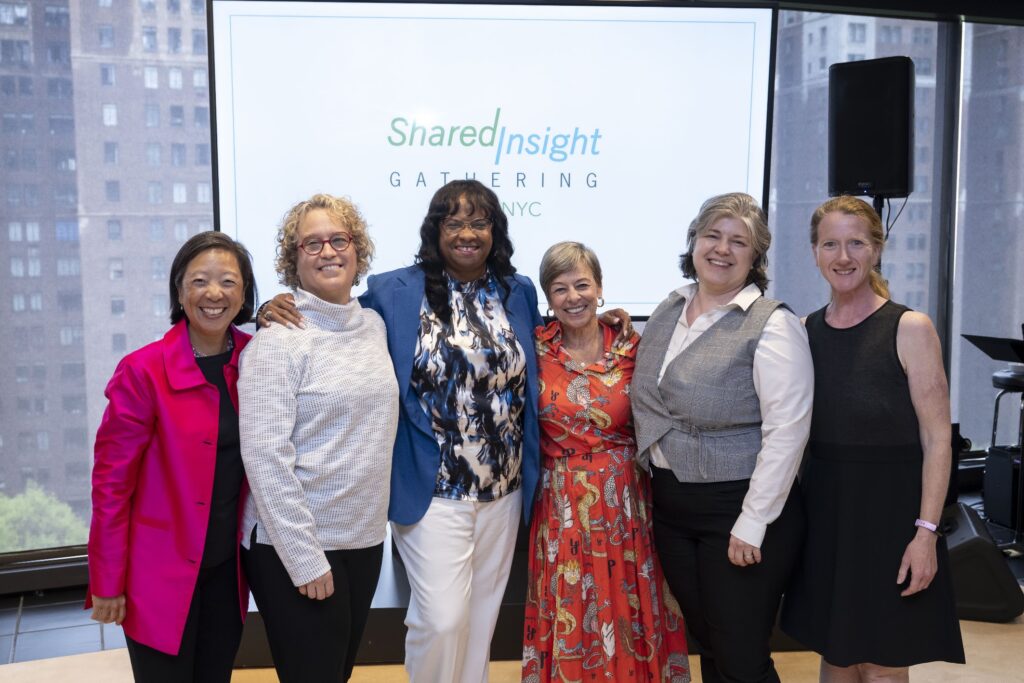
Barr’s Sector Effectiveness Infrastructure strategy supports nonprofit and philanthropic infrastructure at the national level that will enable us to better fulfill our regional mission in New England. This includes engaging with organizations that actively network, collaborate, and share knowledge to advance the social sector. Shared Insight offered our team the opportunity to invest time and resources into a promising national initiative that could improve how our partnerships across New England developed.
National peers learned from the New England lens that Barr brought to conversations about feedback and equity, while we were able to benefit from the diverse perspectives of colleagues elsewhere in the country. This interplay — between our regional grounding and the national context — is a hallmark of our Sector Effectiveness portfolio strategy.
Evolving together and approaching equity
Reflecting on our 10-year investment as a core funder has reminded us of how both Shared Insight and Barr evolved our commitments to advancing equity. From 2018 – 2020, Shared Insight’s approach to equity, diversity, and inclusion shifted from being a distinct strand of work to a core lens across all strategies. Evaluation findings from 2020-2023 highlighted that equity was increasingly embedded in the work— visible in how it framed listening and feedback and its evolving openness to asking hard questions about its success at shifting power.
During this time, Barr forged ahead on our own equity journey. We deepened our commitment to racial equity and adopted it as a core organizational value. We invested in our own learning and asked ourselves tough questions about whose voices are centered in our strategies, how we share power, and what accountability to communities most harmed by structural racism really looks like. Shared Insight’s recognition that listening without change is not enough, and that feedback requires shifting power, reinforced our belief that equity and effectiveness in philanthropy are inseparable. As a core funder, we were grateful for this unique opportunity to learn alongside peers in the field and translate our own learnings back to Shared Insight.
Sunset as a strategic choice, not an ending
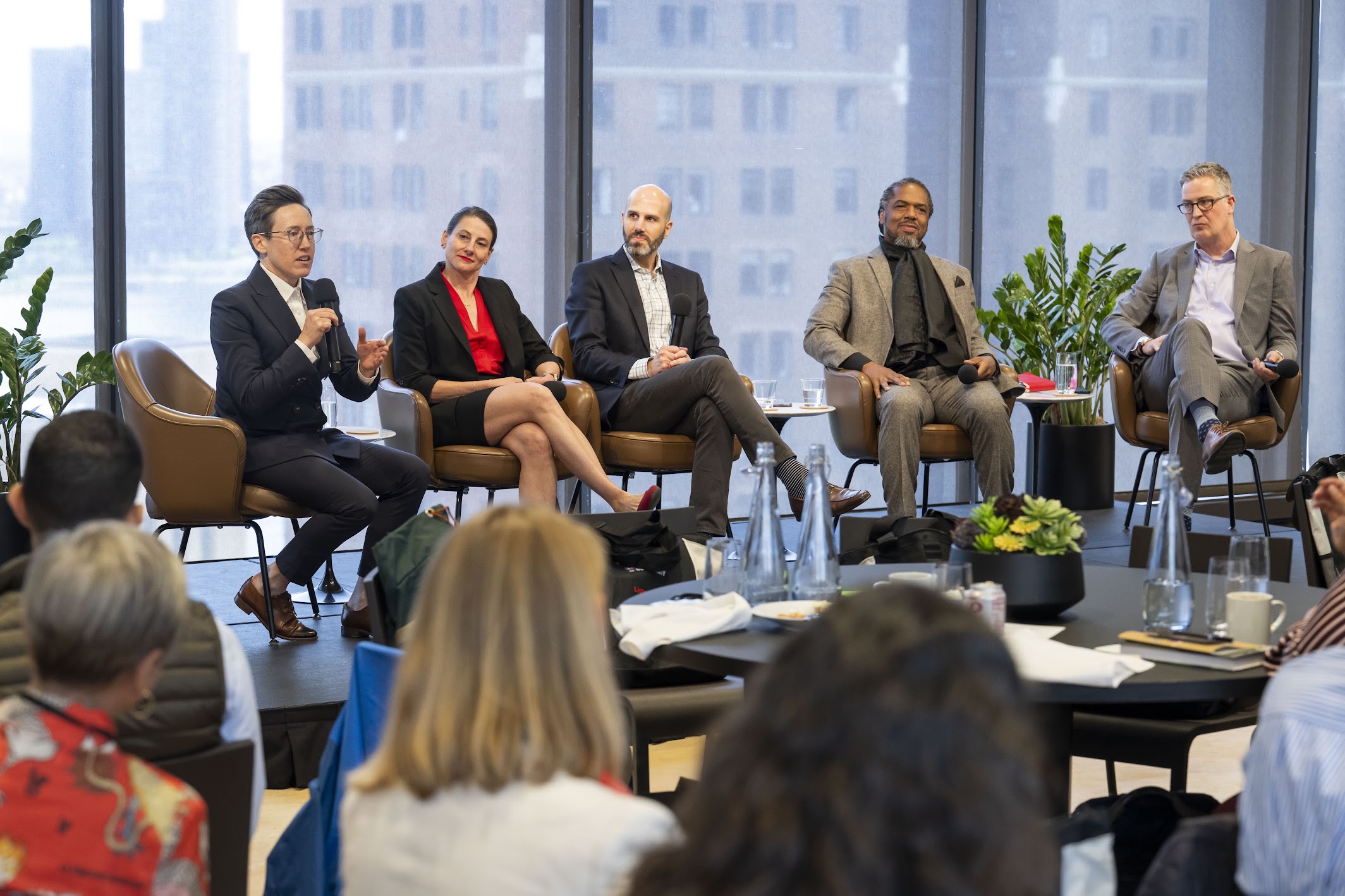
As Shared Insight entered its final years (2023-2026), Barr and other core funders committed to solidifying the infrastructure and relationships needed for the work to meaningfully endure. This meant, among other things, investing in infrastructure organizations and convenings, and developing shared standards. As a collaborative, we “let go” by pushing more responsibility and visibility to infrastructure partners, and launched the Listen to Community initiative in partnership with half a dozen key philanthropy infrastructure organizations as a home for championing these ideas over the longer term.
As highlighted in the closing summary from evaluation partner ORS Impact, there is much to celebrate. Shared Insight leaves a maturing feedback field, anchored by the Listen to Community resource and engagement hub. There are more funders and nonprofits that name feedback as an expected norm in their work. And there are powerful organizations like Listen4Good, Feedback Labs, and YouthTruth doing great work to advance feedback practice. This combination of concrete tools for funders, cultural momentum, and key partners positioned to carry the vision forward gives us hope that the practice of high-quality listening will continue to spread and evolve across the field.
Sustaining momentum and continuing the work
Although the Shared Insight collaborative has ended, the work continues. Barr has provided on-going funding to key feedback organizations including Feedback Labs and Listen4Good. We’ve also championed internal changes to help us listen better at Barr; for example, exploring how we can fairly compensate community members for their time, expertise, and lived experience. This work reflects what we learned through the collaborative: a strong and effective nonprofit and philanthropic sector requires high-quality listening, supported by a robust feedback field. And a strong field requires shared vision and durable institutions that can continue to innovate. For like-minded funders, this is an important moment to engage. Through support for organizations such as Feedback Labs, Listen4Good, YouthTruth, and the Listen to Community initiative, other funders can continue to leverage investments in Shared Insight and help to:
- Strengthen the infrastructure that makes high-quality feedback possible for nonprofits.
- Embed equity and lived expertise into how foundations and nonprofits design, implement, and assess their work.
- Make it standard practice in philanthropy for funders to listen with a goal of shifting power to communities.
We invite funders who share our commitment to long-term, equity-centered, and thoughtful practice to join us in backing the feedback field, and stewarding your own behavior change to listen to community.
Join the conversation