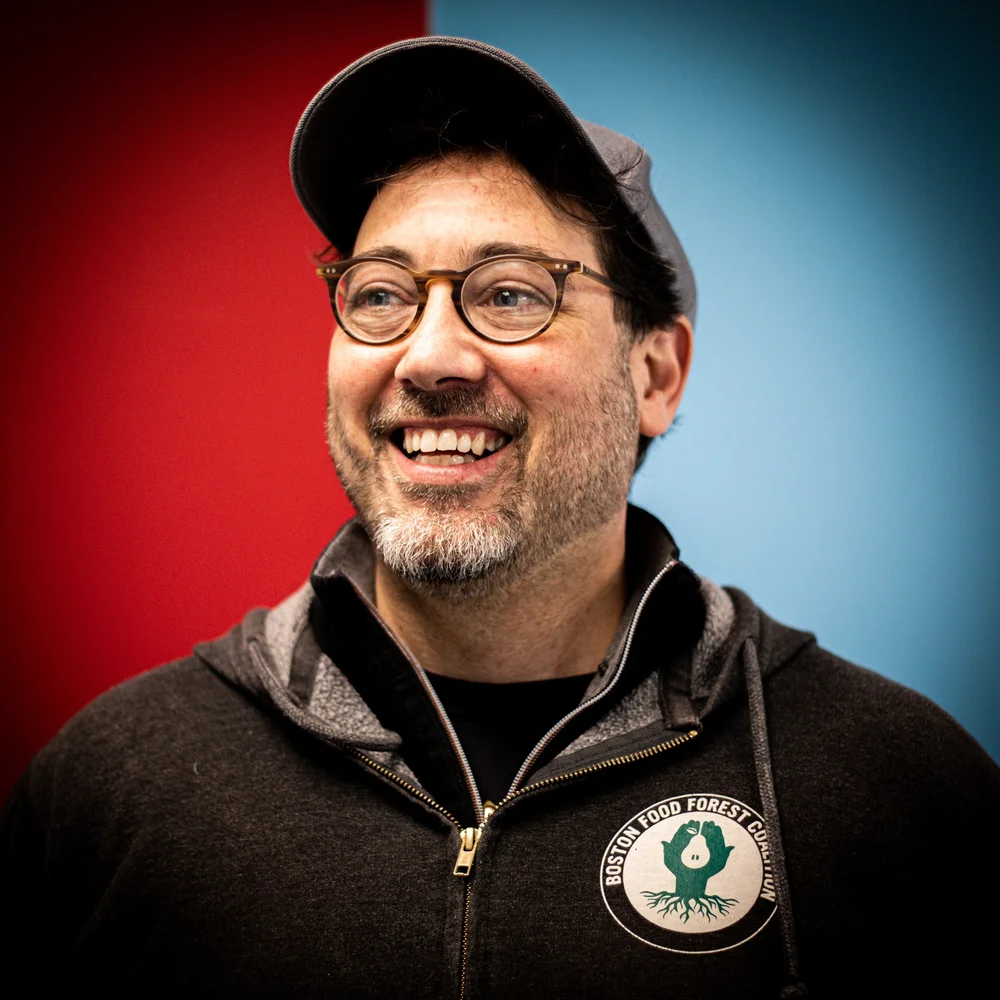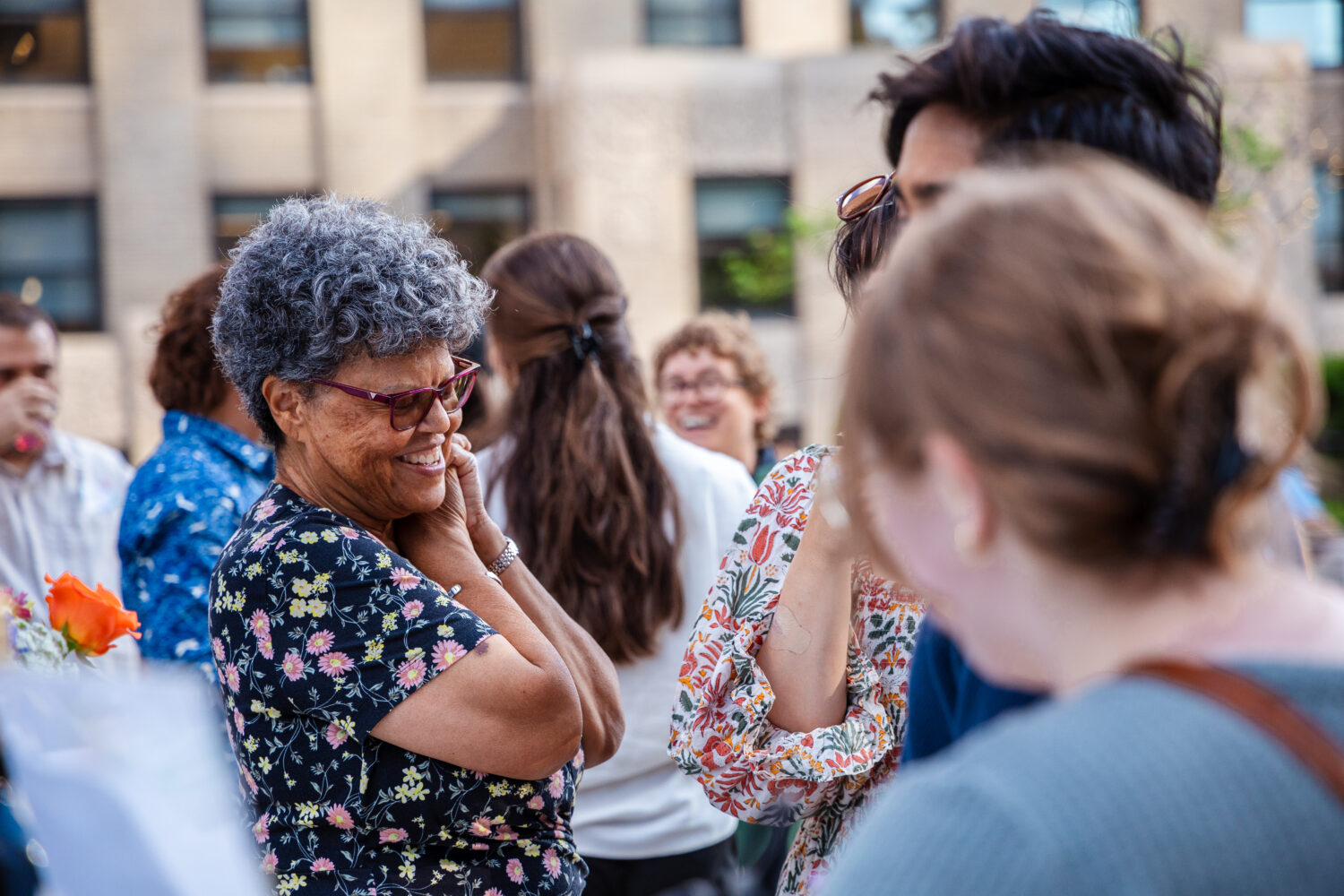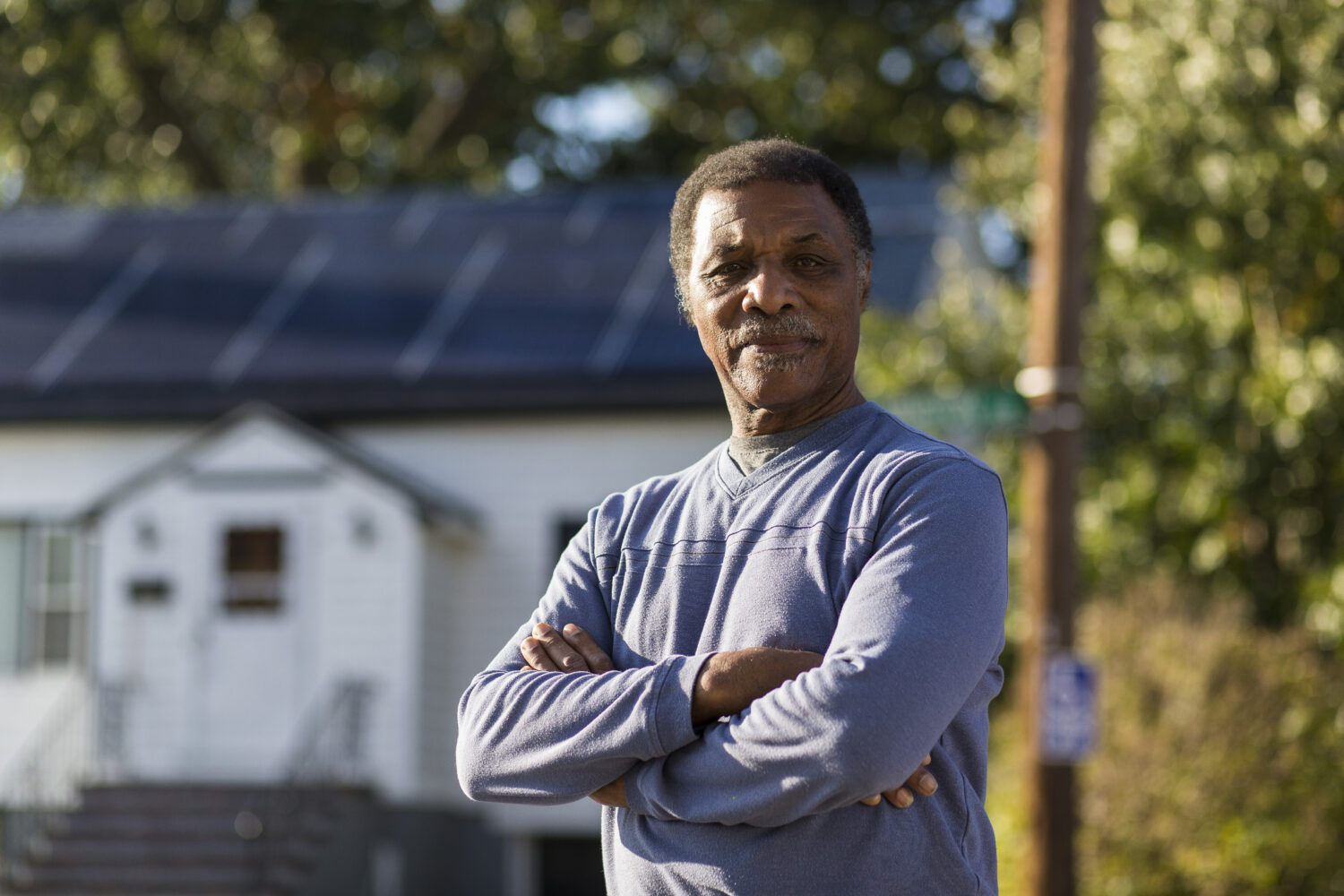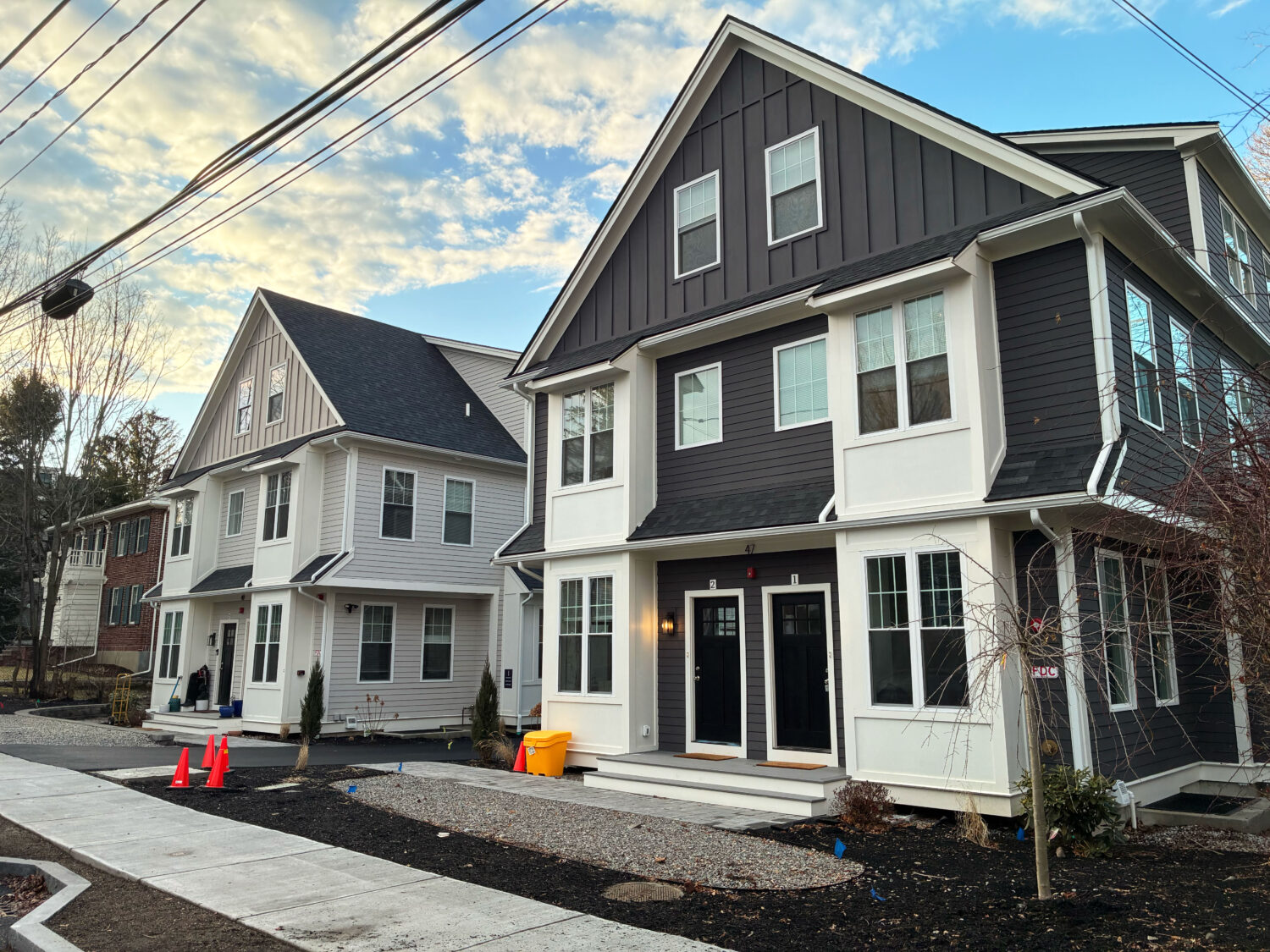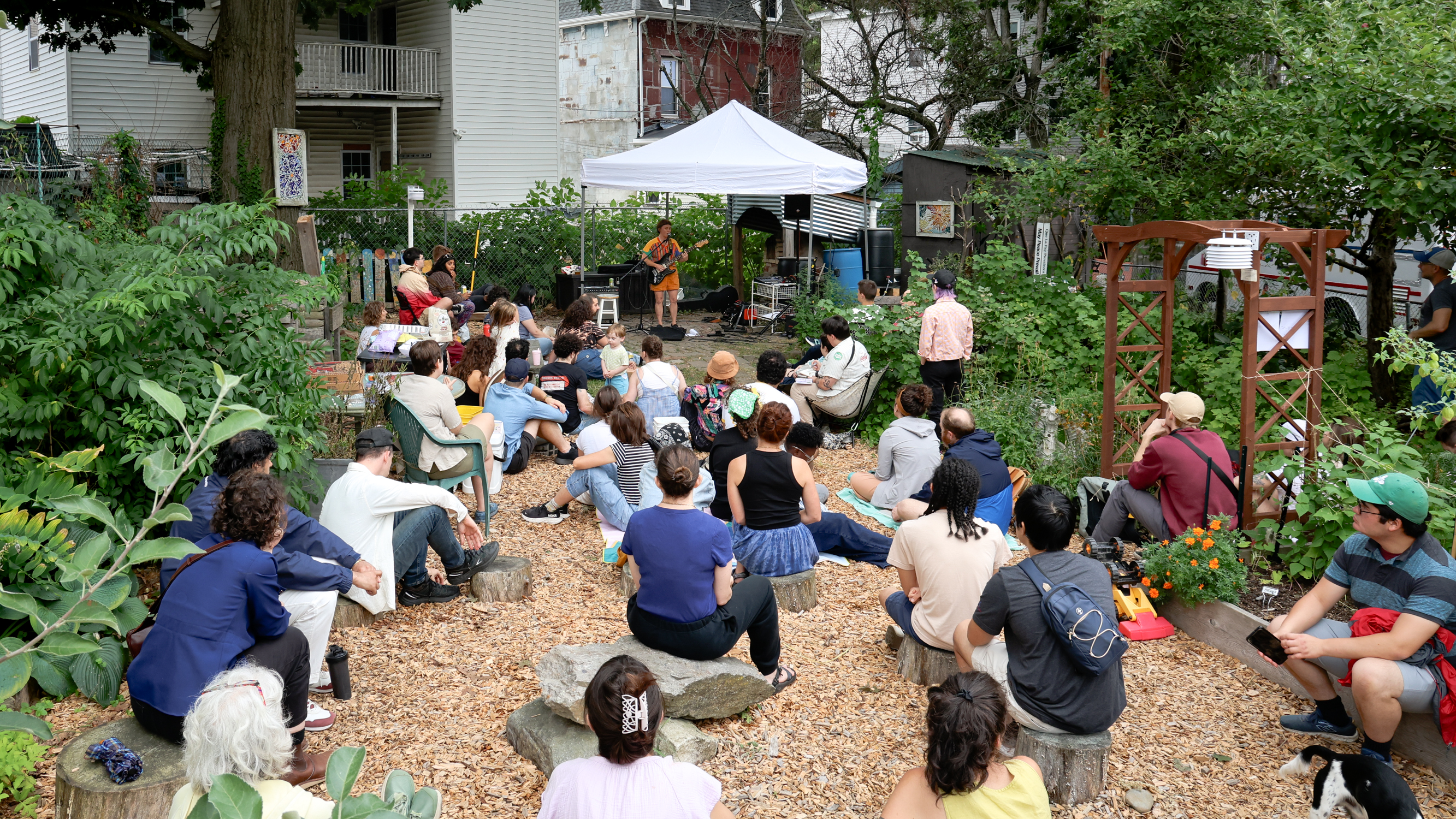
In 2010, the vacant lot near my home in Egleston Square was a trash heap. Years of illegal dumping had left it full of nip bottles, hypodermic needles, and rusted car parts. My neighbors and I started asking around to see what people wanted to do with it, and then we began to dig. We hauled the trash out and the good soil in, and we began to plant a food forest, a layered ecosystem of fruit and nut trees, berry bushes, and other edible perennials designed to grow back and feed people, year after year.
Quickly, Egleston Community Orchard became more than just a place to grow food. Tending the land together became a way for us to meaningfully connect across language, class, race, cultural, and political divides. We shared tools, swapped gardening insights, and hosted potlucks. We welcomed honeybees and butterflies. A preschool class visited weekly, seeking refuge beneath our resident oak tree on hot days. Gann Academy student volunteers worked with neighbors to build a cob oven, and we hosted pizza nights featuring vegetables from the garden. The dead compacted city soil became saturated with new life.
The Boston Food Forest Coalition was born when we connected with other groups of neighbors working to transform city lots into public edible parks. We didn’t want to lose all of the good work we were doing, so we incorporated as a non-profit community land trust, a legal structure that allows us to collectively own these parcels of land forever.
Each food forest park cools air temperatures, conserves water, stabilizes the ground against flooding and erosion, and regenerates the soil. Our food forests are a type of green infrastructure, mitigating inhospitable conditions like heat, extreme weather, and pollutants. But we also need strong social infrastructure to adapt to our rapidly changing climate.
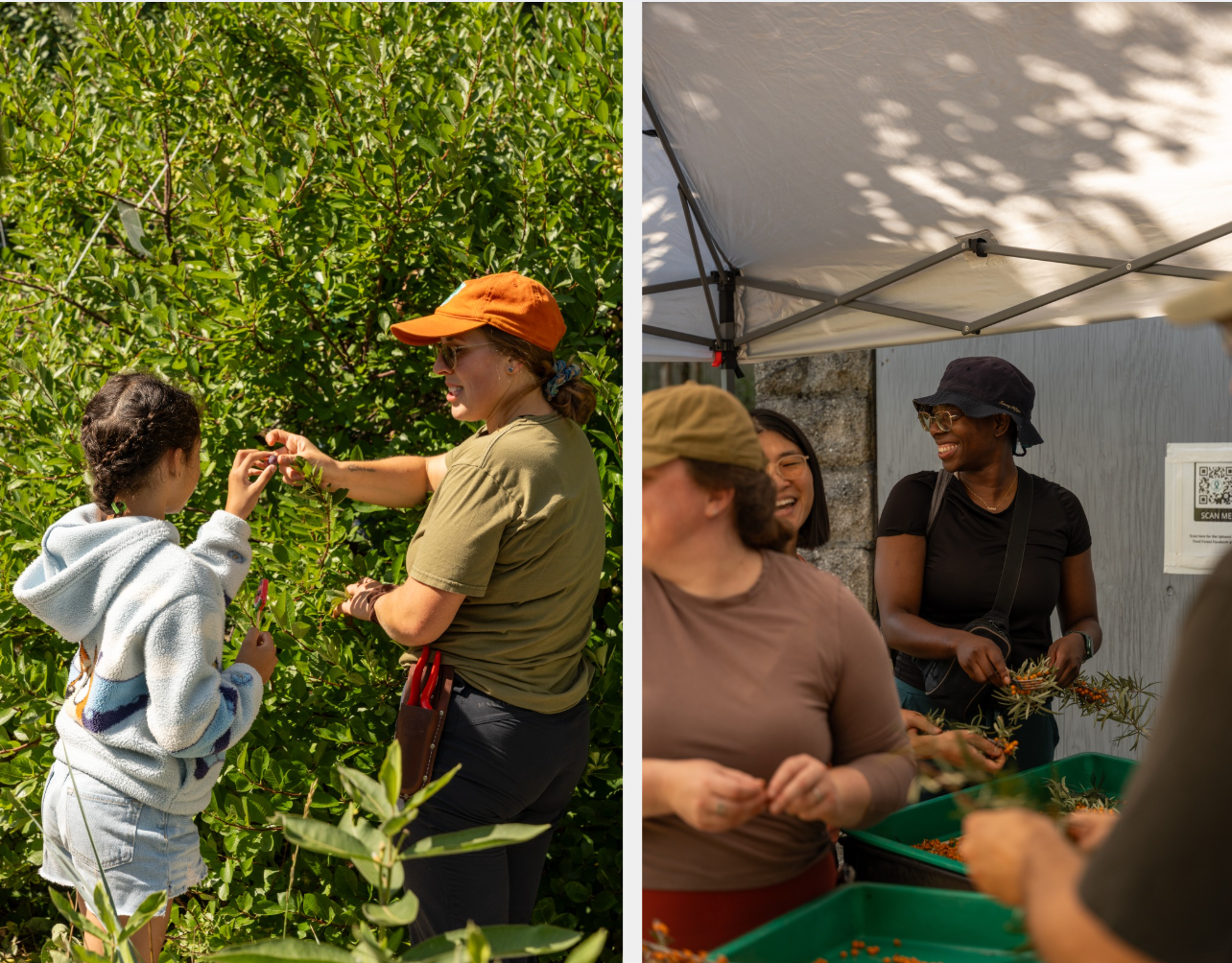
Communities with high social cohesion – places where people know their neighbors – are twice as likely to feel their neighborhoods are well-prepared for an extreme weather disaster. Daniel Aldrich, Northeastern University Professor of Resilience and author of the book Beyond Common Ground: How Everyday Places Solve Big Social Challenges, argues that food forests build stronger social ties – and that communities with stronger connections to place and to each other have better physical and mental health during peacetime and crisis alike. When we build food forests, we are strengthening community ties; we constantly have people telling us, “I didn’t know my neighbors before the food forest was in the neighborhood.”
If you are a food forest steward or volunteer, you have people nearby who you can call in a crisis. Because you have this foundation of working together – troubleshooting, planting seeds, and breaking bread together — you can show up for each other when the going gets tough.
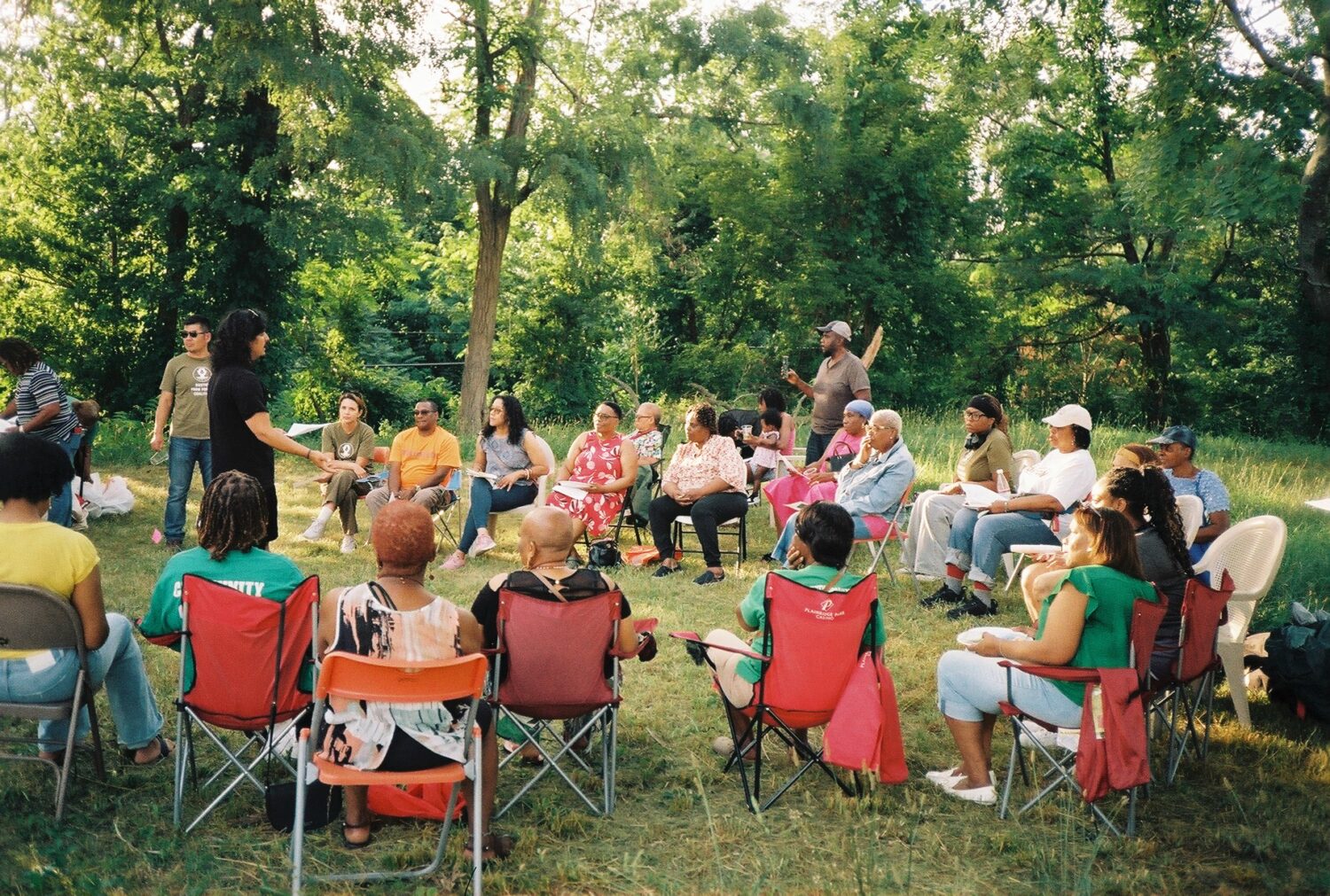
These are some ways that we build social infrastructure into our work:
- Civic engagement and community co-design: Aldrich writes about the importance of linking ties, or connections from citizens to influential decision-makers like city officials, in building community resilience. Our food forest design process offers a direct line of communication with the City. We work shoulder-to-shoulder with community leaders to create a shared vision for the space and advocate for that vision to the City of Boston. In 2026, the City of Boston gave BFFC the Climate Leaders Award for community organizations working to protect the environment, and called for 30 food forests by 2030 in the Climate Action Plan.
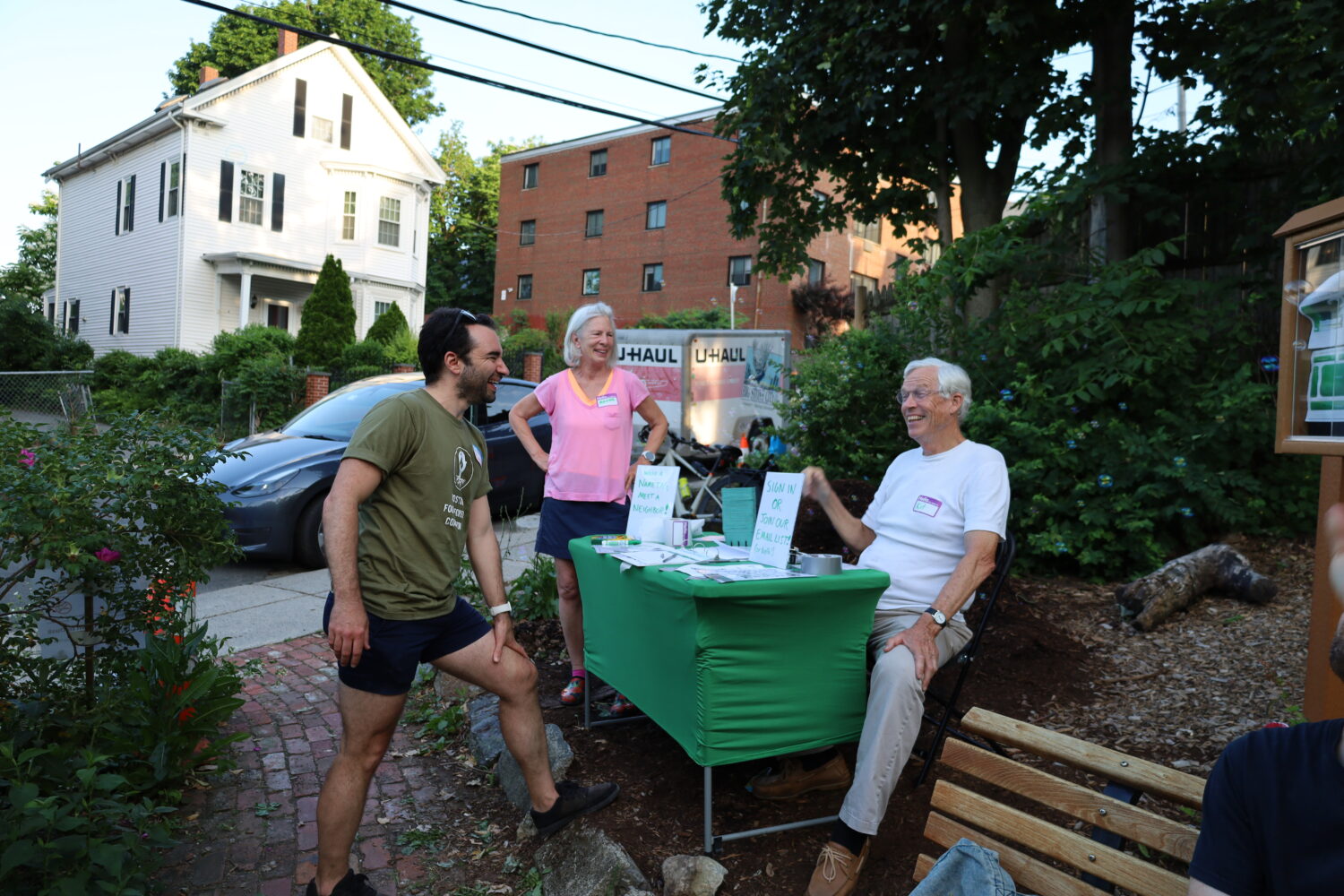
- Community ownership: Our community land trust (CLT) legal structure holds and protects land for community use. Our CLT’s Board of Directors is composed of community members for whom the land is being held. Thus, the land is owned by the people, for the people.
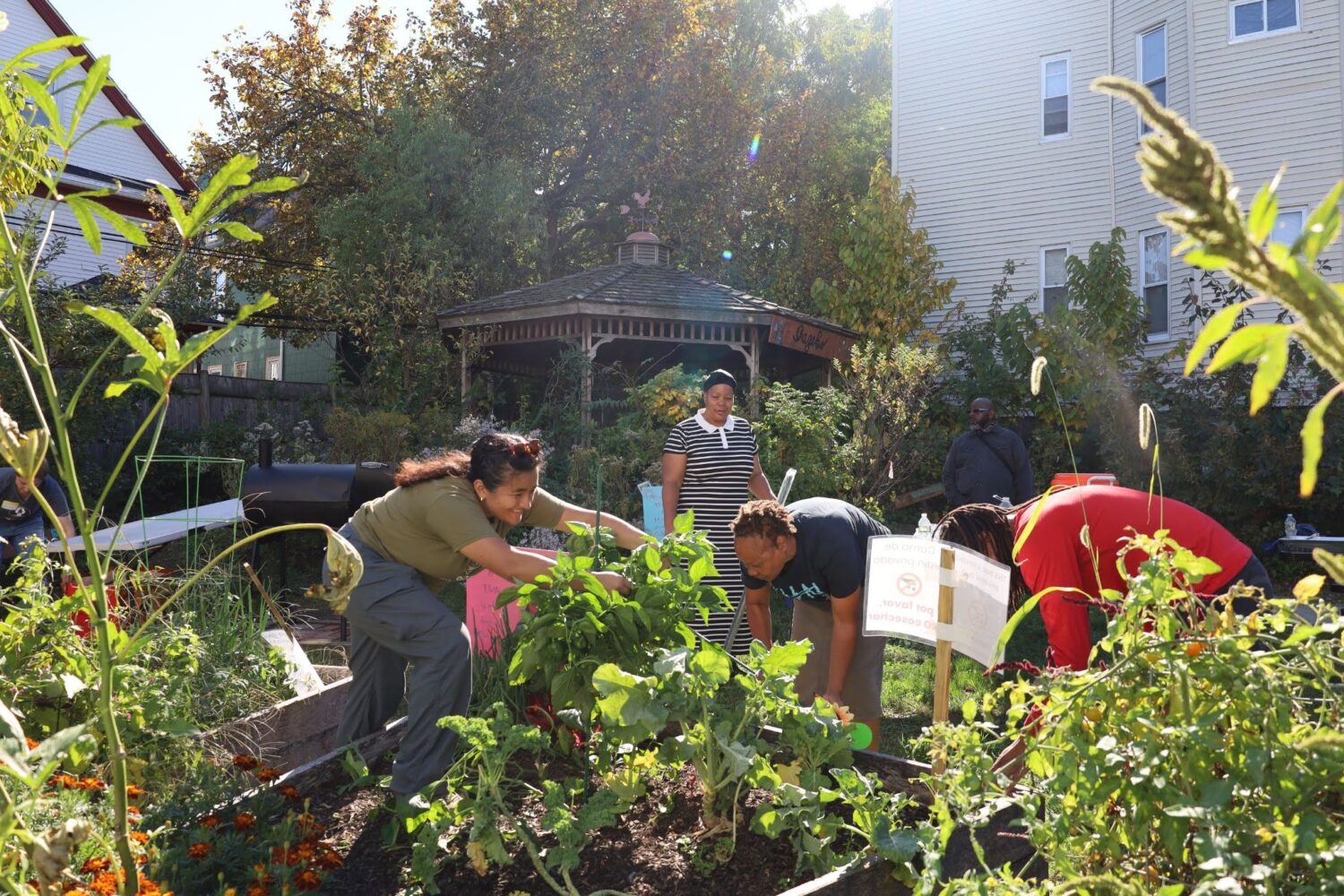
- Stewardship volunteer model: The same neighbors and local leaders who design the food forest become the stewards of that space. BFFC supports stewardship teams through educational workshops, hands-on technical assistance, maintenance support, and more. Stewards determine the unique culture of the place.
Strong social ties mean that support, advice, and resources can circulate freely between neighbors. It also drives collective action and investment in the places we call home.
Next month, we are reaping the benefits of that investment at Ryo’s Food Forest in Dorchester (89 Radcliffe Street). After four years of advocacy, this once-vacant land is officially opening on Sat Nov 7th as a food forest that will belong to the community forever.
We invite you to celebrate the grand opening of our 14th site and to celebrate our continued effort to build a climate resilient Boston where all of us belong.
The Boston Food Forest Coalition receives funding from Barr’s Climate Program. To build climate resilience, Barr backs community-led, equitable solutions that strengthen both physical and social infrastructure.